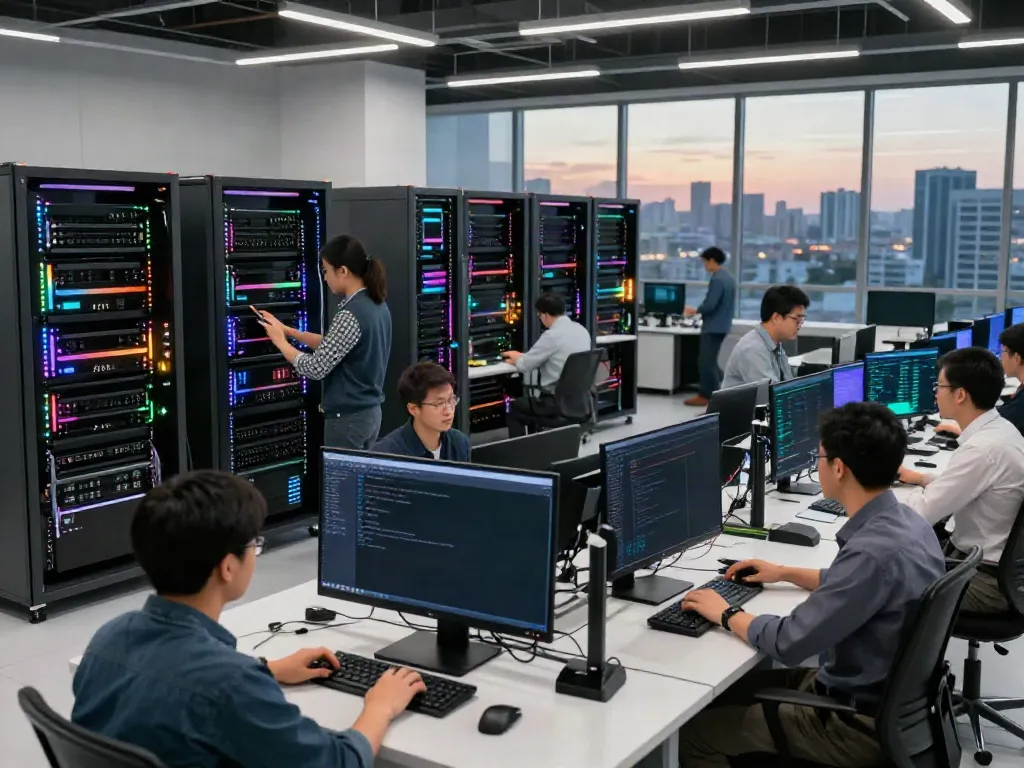
Understanding GPU Computing Fundamentals
From gaming to complex calculations in fields like artificial intelligence (AI), GPU computing has emerged as a transformative force. By leveraging the power of Graphics Processing Units (GPUs), organizations can handle parallel processing tasks more efficiently compared to traditional CPU-based systems. In this article, we will delve into the core aspects of GPU computing, its importance in AI, and how it can revolutionize various industries.
When exploring options, GPU computing provides comprehensive insights into managing data and resource allocation effectively. This shift to GPU-based workflows is essential for businesses looking to remain competitive in a data-driven world.
What is GPU Computing?
GPU computing refers to the utilization of a computer's graphics processing unit to perform computation-intensive tasks that were traditionally reserved for the central processing unit (CPU). By distributing tasks across many cores of the GPU, this technology enables faster processing and higher performance for a wide array of applications, especially those involving large datasets or complex mathematical models. It is increasingly used in areas such as machine learning, scientific simulations, and real-time rendering.
Key Differences Between CPU and GPU
The fundamental difference between CPUs and GPUs lies in their architecture. CPUs typically have a few cores optimized for sequential processing, making them suitable for single-threaded tasks. In contrast, GPUs consist of thousands of smaller, efficient cores designed for parallel processing. This architecture allows GPUs to perform many operations simultaneously, which is ideal for the high throughput required in AI and data-heavy applications.
Importance of GPU Computing in AI
As AI technologies advance, the demand for computational power grows exponentially. GPU computing plays a vital role in this landscape, enabling faster training of deep learning models and processing of vast amounts of data needed for AI applications. For instance, a complex model that might take weeks to train on a CPU can often be completed in just days or even hours on a well-configured GPU system. This efficiency not only accelerates innovation in AI but also reduces operational costs for businesses.
Core Components of GPU Infrastructure
To effectively deploy GPU computing, understanding the core components of GPU infrastructure is crucial. This includes the hardware architecture, cooling systems, and power supply, all of which must work in harmony to achieve optimal performance.
Overview of GPU Hardware and Architecture
The GPU architecture consists of numerous cores that work collaboratively to perform rendering and computation tasks. Modern GPUs are equipped with parallel processing capabilities and memory designed to handle large volumes of data. This architecture is particularly beneficial for tasks involving neural networks and other machine learning frameworks where data parallelism is key.
Cooling Solutions for Optimal Performance
High-performance GPU computing generates significant heat, necessitating robust cooling solutions to maintain optimal operating temperatures. Liquid cooling systems and advanced airflow designs are crucial to prevent overheating and ensure the longevity of GPU hardware. Well-cooled systems can sustain peak performance longer, crucial for continuous AI workloads.
Importance of Power Supply in AI Operations
The power supply is a critical component of GPU infrastructure. GPUs require a stable and sufficient power source to function efficiently. Any fluctuations can lead to performance degradation or hardware failure. Therefore, having a reliable power supply, including backup options, is essential for running AI applications that demand maximum uptime and availability.
Implementing GPU Computing in AI Workflows
Integrating GPU computing into existing AI workflows can significantly enhance efficiency and performance. However, it requires careful planning and execution to fully leverage the benefits of GPU capabilities.
Steps to Integrate GPU Computing into Existing Infrastructure
- Assess current workloads and identify processes that can benefit from GPU acceleration.
- Select appropriate GPU hardware based on performance requirements and budget.
- Train teams on GPU programming and optimization techniques.
- Monitor performance and adjust infrastructure as necessary to optimize resource allocation.
Best Practices for Performance Optimization
To maximize the benefits of GPU computing, organizations should adopt best practices such as:
- Utilizing libraries and frameworks optimized for GPU acceleration (e.g., CUDA, TensorFlow).
- Implementing load balancing to ensure GPUs are not underutilized.
- Regularly updating drivers and software to take advantage of enhancements and optimizations.
- Benchmarking performance before and after GPU implementation to measure improvements.
Common Challenges in GPU Implementation
While GPU computing offers numerous advantages, there are also challenges to overcome, including:
- High initial costs for hardware and infrastructure setup.
- Complexities in transitioning from CPU-based workflows to GPU-based systems.
- Need for staff training to effectively utilize GPU technologies.
- Potential compatibility issues with existing software and applications.
Measuring and Improving GPU Performance
Once GPU computing is implemented, continuous measurement and improvement of performance is essential to ensure the system operates effectively and efficiently.
How to Analyze GPU Performance Metrics
Key performance metrics to analyze include throughput, latency, and resource utilization. Tools such as NVIDIA’s Nsight and GPU-Z can help organizations monitor these metrics, allowing for adjustments to workloads and resource allocation as necessary to enhance performance.
Tools for Monitoring and Management
Various tools are available for monitoring GPU performance, including:
- NVIDIA-SMI for NVIDIA GPUs, which provides information about GPU utilization, temperature, and memory usage.
- HWMonitor for general hardware monitoring, including GPU temperatures and voltages.
- Perf for Linux systems, providing performance monitoring across multiple systems.
Scaling GPU Solutions for Future Needs
As AI workloads evolve, it is vital to scale GPU solutions proactively. This could involve adding more GPUs, utilizing cloud-based GPU services, or integrating new technologies as they become available. Planning for scalability ensures that businesses remain competitive as demand for computational power grows.
Future Trends in GPU Computing for 2026 and Beyond
The landscape of GPU computing is constantly evolving. Emerging technologies, innovations in AI, and the increasing demand for data processing power will shape the future of GPU infrastructure significantly over the next few years.
Emerging Technologies and Innovations in GPU
Technologies such as machine learning optimization, improved cooling techniques, and more powerful GPUs with advanced architectures are on the horizon. These innovations will enhance processing capabilities and energy efficiency, making GPU computing even more integral to AI operations.
Impact of AI on GPU Development
As AI applications become more sophisticated, the requirements for GPU performance will increase. This will drive manufacturers to develop more powerful GPUs capable of handling complex AI tasks, including real-time analytics and autonomous systems.
Preparing for the Next Generation of Computing
Organizations must prepare for the next generation of computing by investing in research and development, training their teams on new technologies, and adopting flexible infrastructures that can evolve with changing demands. This proactive approach will ensure that businesses can leverage future advancements in GPU computing effectively.
What are the benefits of GPU computing?
GPU computing provides numerous benefits, including increased processing speed, enhanced energy efficiency, the ability to handle large datasets, and improved performance in data-heavy applications such as AI and machine learning.
Can GPU computing improve data processing speed?
Yes, GPU computing can significantly improve data processing speed by allowing multiple calculations to occur simultaneously. This parallel processing capability is particularly advantageous for tasks that require extensive numerical computations.
What industries benefit most from GPU computing?
Industries that rely heavily on data processing, such as finance, healthcare, entertainment, and research, benefit immensely from GPU computing. These sectors utilize GPUs for tasks ranging from algorithmic trading to medical imaging and CGI rendering.
How does cloud computing relate to GPU technology?
Cloud computing services often include GPU offerings, allowing organizations to access powerful GPU infrastructure without the need for significant capital investment. This flexibility enables businesses to scale GPU resources according to their computational needs.
Are there specific programming languages for GPU computing?
Yes, several programming languages and frameworks are tailored for GPU computing, including CUDA for NVIDIA GPUs, OpenCL for general-purpose GPU programming, and TensorFlow for machine learning applications. These tools enable developers to harness GPU capabilities effectively.